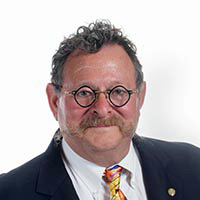
RabbiTodd
Rabbi Todd Thalblum

February 2012


Shalom All,

The 15th day of the Hebrew month of Shvat marks the beginning of the New Year for trees. On this day we celebrate the holiday of Tu B'shvat. We call it the New Year for Trees because we use this day when calculating the ages of our trees. We track the ages of our trees because the Torah sets limits on when our ancestor’s were allowed to harvest the produce from their orchards. For example, we are taught that the fruit from a tree that is grown in Israel may not be eaten during it’s first three years; the fourth year's fruit is then designated as God’s, and after that the fruit can be eaten. In addition, every seventh year, is a sabbatical year during which a tree’s fruit can’t be picked. Instead of calculating the planting date of every tree, in one’s orchard, the Torah set Tu B’shvat as the day on which every tree ages one year, no matter when in the year it was planted.

Of all the things in this world to have their own New Year, what makes trees so different that they get their own day? Furthermore, if we accept that trees do require a day on which they all age, why couldn’t it be on the same day that we celebrate the New Year? Why not age a tree every
Rosh Hashanah?

In order to explain this, we need to take a closer look at trees, and what they might represent. Unlike most vegetation, fruits don’t grow from the ground directly, but must first grow a strong trunk, from which branches can reach out, from which fruit can ripen.  While all of this is going on, the roots beneath the ground must firmly establish themselves to offer sturdy support for the tree, it’s branches and the fruit that grows from it.

This unique cycle has many instructive qualities that we can learn from. In order to  grow and enjoy the “fruits” of being a Jew, we must also first develop a strong trunk and roots to support our growth. This can been seen in our commitment to Jewish knowledge and observance, and our connection to a Jewish community. Once we have a strong trunk, we can then grow our own branches, representing our own unique performances of Jewish laws and celebrations.

But the more beautiful analogy we may draw from
Tu B’shvat has to do with the time of year when it’s celebrated. Of all the seasons in which we might appreciate the wonders of the tree cycle, Tu B’shvat occurs during the Winter, far from the “peak” of a tree’s aesthetic life. Instead of being outwardly beautiful, with leaves and fruit a plenty, a tree in the Winter is hibernating. It’s all wood and air with great potential, gathering it’s strength for the coming Spring. We too have wonderful potential. But without a strong foundation we cannot become successful, identified Jews. The lesson then is to develop as a Jew, just like a tree, and not to care about looking good in the process.

This year
Tu B'shvat falls on February 8th. We will be celebrating it with a traditional Tu B’shvat Seder during Religious School on February 5th. Everyone is invited to join us.

Rabbi Todd


last month